Keynote Speech Given by Kaira Jewel Lingo
Transcribed from the 2024 Annual SDI Conference
I think this summit, this gathering, is such a key part of navigating the Global Dark Night. It is coming together to take care of ourselves, to take care of each other, to feel each other, to reconnect with all that nourishes and resources us, and with our own wisdom lineages, ancestors, and guides.
There’s something co-regulating in a community about just sharing what resources us, because in a way, all the things others use to resource themselves become a little more available to us as well. I’ll share a bit about how we can navigate the Dark Night, and then also, how we can work with trauma and empathy fatigue, and how we can take care of ourselves as beings who support others, especially in a time where there’s so much to hold.
Facing and Accepting Our Situation
I really appreciate our ancestor, James Baldwin and his wisdom, that “not everything that is faced can be changed, but nothing can be changed until it’s faced.” This starting point is needing to accept the reality of what’s here, right?
This first noble truth in Buddhism is that suffering exists. It’s not all there is, but if we don’t start with the difficulty or the reality of what’s facing us, we can’t find our way out. The first Noble Truth leads to the second—there is a cause of the suffering that we’re experiencing. The third Noble Truth follows that it’s possible to end those causes that lead to suffering, and then the fourth Noble Truth is that there is a path that leads to the end of suffering, or in other words, well-being is possible. If you end the causes of ill-being, you have well-being. There is a path to well-being. There’s a way to bring about well-being, but you don’t get to the fourth noble truth if you don’t acknowledge the first. If you don’t face pain, then it’s haunting you all the time, right? It’s always there in the background, underneath the surface.
So, the Global Dark Night of the soul—a very important framework—acknowledges that we are at a unique point in history, that has never happened before, although many civilizations have ended, and many species have gone extinct. Ninety-eight percent of indigenous people were wiped out by colonialism in the Americas. Many species are going extinct as we speak, but what we’re facing at this moment is larger than humanity, is greater than what all the species of this earth, our kin, have faced before. While there have been numerous mass extinctions in our planetary past, we are facing the first human-caused, planet-wide danger of collapse, what some call the “polycrisis.”
Facing this can be very hard to accept. We have basically been given a terminal diagnosis as a species, as a planet. Our tendency is to resist or deny this diagnosis, but acceptance of the gravity of our situation can paradoxically bring us peace. It can be healing; it can even be refreshing to look at it squarely in the face and be completely open to the full range of our emotions as we encounter the possibility of this polycrisis. We can welcome our emotions as friends, so that the power they hold can be directed towards meaningful action. We can and need to turn towards these parts of ourselves. In the Christian tradition, the Dark Night is the dying of the false self. We die so something greater in us, that we perhaps are not acknowledging, can live in a new way. It’s horrifying and yet very promising and hopeful.
In the darkness, there are also the nightmares, right? We need to be with those. There’s a lot of power in difficult, challenging emotions, but we can’t access it if we don’t turn towards it. My teacher, Thich Nhat Hanh, or Thay as his students call him, meaning ‘teacher’ in Vietnamese, in his book, The World We Have: A Buddhist Approach to Peace and Ecology, tells the story of a senior nun from Vietnam, who came to visit Plum Village, the center he founded in Southwest France. She had been diagnosed with terminal cancer and was given three months to live.
She accepted this and decided to put all of her energy into practicing, to be fully present in each moment of the day she had left to live. She became aware of her breathing. As someone said, “this exquisite nourishment of just one inhalation,” in the chat just now. She became aware of her steps. She became aware of her bodily movements throughout the day. She really took the opportunity to practice mindfulness in every moment. She took that to heart when she came to practice. Then she was about to go back to Hanoi where she expected to die, and a sister persuaded her to get a checkup in France, and the doctors found that all the metastasized cancer areas had receded to just one area, and she lived for fourteen more years.
In this book, Thay told this story as a collective metaphor. We are actually all being given this terminal diagnosis; we are facing possible extinction. If we can accept that things are going to change, maybe end, and that we are on the brink of real collapse, if we accept that, and if we accept it skillfully, it can take us into a space of great power rather than despair where we decide to put our whole hearts into living deeply in these times, knowing this is “it.” We need to live this last whatever amount of time we may have consciously, intentionally, fully as a human species in harmony with other species and in harmony with the earth, understanding, “Okay, we messed this up. Now we may just have a little bit of time. How can we live in an awakened presence with each other? How can we make amends?”
Another image that can help us is of a plane. We know that the plane is having real trouble and won’t make it to its destination. Do we pretend nothing’s going wrong and end up in crashing nosedive? Or if we recognize it soon enough, can we plan for a gradual descent that can minimize the suffering to everyone concerned? We can’t make that choice to make a gradual descent unless we accept that the plane’s not going to make it.
What would be possible if we really took it seriously that we might not have a future? How would we want to use the next decade, assuming we have that long to fully integrate this reality? (Scientists have said we have about six more years left to make the extraordinary shifts necessary). What could that make possible that hasn’t yet been possible? What if we lived in a way that we haven’t yet lived?
We talk about this as what’s coming in the future, but we know many places on the planet have already become a hell. Not just for humans, but for so many species, coral reefs, whole species, and that this has happened throughout history. Right now, there so many places where there’s not enough food, no safety, basic needs aren’t being met and so there’s still room for our response, even in the midst of this tight, tight corner that we’re being pushed into.
For me, the story of this nun, it’s a kind of spiritual question, it’s a kind of North Star that I use to orient myself. What could still be possible if we really took it to heart, if we really took it seriously?
Thay also writes in The World We Have:
“The Buddha taught that all phenomena is impermanent. There is birth, then there is death. Our civilization is also like this. In the history of the earth, many civilizations have ended. If our modern civilization is destroyed, it follows the law of impermanence. If our human race continues to live in ignorance and a bottomless pit of greed as at present, then the destruction of this civilization is not very far away. We must accept this truth just like we accept our own death. Once we accept it, we will not react with anger, denial, and despair anymore. We will have peace. Once we have peace, we will know how to live so that the earth has a future, so that we can come together in the spirit of siblinghood and apply the modern technology available to us, which includes our spiritual technologies, to save our beloved green planet. If not, we will die from mental anguish before our civilization actually terminates.”
Accepting our situation can lead to peace, and that peace can lead to the clarity needed to take skillful action.
Professor Jem Bendell, in his paper on deep adaptation, points to the wisdom in opening to climate and polycrisis-related despair and the positive transformation this kind of acceptance can bring about. He says:
“The range of ancient wisdom traditions see a significant place for hopelessness and despair. Contemporary reflections on people’s emotional and even spiritual growth as a result of their hopelessness and despair align with these ancient ideas. The loss of a capability, a loved one, a way of life or the news of a terminal diagnosis have all been reported or personally experienced as jumping off points for new ways of perceiving self and world, with hopelessness and despair being a necessary step in the process.”
So, this acknowledging, this not hiding from the truth, the stark, scary, horrifying truth of our situation can open all of these possibilities.
Goethe said, “Until you know this deep secret, die and become, you will be a stranger on this dark earth.” Pablo Casals says it similarly, “The situation is hopeless. We must take the next step.”
The Global Dark Night, it’s not about getting smarter, accumulating more, which some would say would lead us to become more dangerous. I mean, we’ve created this Global Dark Night out of our knowledge and science, our technology, industrialization, and greed. It’s really about deeply feeling both the terror and the marvel of the experience of this time. So that’s the first thing—to face what’s happening.
Let Go and Befriend Uncertainty
The second piece I want to offer is that there is an art to suffering. This beautiful teaching of Thay’s, of Thich Nhat Hanh’s, is that the lotus only grows in mud. “No mud, no lotus.” There is a way of experiencing suffering in a way that doesn’t make it worse, where we turn towards it, where we learn to be with it rather than fight it, judge it, or deny it. He would often say, a good practitioner is not someone who doesn’t suffer, but someone who knows how to be with their suffering, who knows how to take good care of their suffering. So suffering is not the problem. The challenge is what do we do with it? How do we learn to be with it?
One of Thay’s most famous poems, “Please Call Me by My True Names,” came out of this terrible experience of he and the community working with trying to end the war in Vietnam when he was in exile in Paris. They were receiving letters of people escaping by boat all the time and trying to send aid, trying to help people get resettled. He received a letter about a horrible thing that happened on a boat that was attacked by sea pirates. A sea pirate had raped a 12-year-old girl on the boat, her father was killed trying to protect her, and she threw herself overboard, committing suicide. Thay was so distressed when he read this letter. He had to practice walking meditation in the garden to calm himself down.
At first, of course, as any of us would be, he was very angry. He was very upset. And as he walked and as he breathed and as he looked deeply, he saw that if he were born as a baby on the coast of Thailand twenty years prior, in a situation of poverty, in a situation of no opportunity, no good examples, no mentors, then he would have also become a sea pirate and done the same thing. The poem reflects his deep insight that we are both the victim and the perpetrator. We are the prey and the predator. We’re all of it.
The poem shows us how we can learn to act and live from this place of inter-being. But that insight came to Thay because of this terrible tragedy, and that’s the possibility of this Dark Night.
Matthew Fox reminds us of how in a time of deep darkness there’s little or nothing to steer by but the fire deep in our hearts, the fire that is hiding most deeply in our hearts. That’s why the Dark Night can so readily bring out the best in us, this ability to see ourselves in others, to not vilify even the most horrendous things. We can still speak out against them, we can still do our best to protect those who are vulnerable, but without vilifying and dehumanizing each other, because we know that doesn’t lead to anything helpful.
One of the things that the Global Dark Night invites us into is surrender—to let go of the need to control, the attachment to outcome, so that something bigger, more attuned can move through us, so that we can really be of the greatest service possible. And when we talk about burnout and empathy fatigue and supporting people in trauma, this surrender is really key. It gives us a measure of equanimity and ability to meet things as they are without turning away, without retreating into defeat, so we can befriend uncertainty. It doesn’t have to be the enemy.
I remember when I was going through a very difficult time in my life of trying to discern if I should stay in the monastery, stay ordained as a nun, or leave. It was such a disruptive time. I have never in my life before or since experienced a kind of disintegrating of my identity like I did in that time where I felt called out of the monastery, but I didn’t yet know where I was supposed to be or what I was supposed to do.
I remember sitting on a long silent retreat, and my interview teacher, when I said, “I just feel so helpless and so distressed that I don’t know what’s to come,” he mentioned Alan Watts’s book, The Wisdom of Insecurity. He said, “There’s so much that’s possible when you don’t know what’s coming. If you know what’s coming, there’s only one thing that’s possible. But if you don’t know, there are all of these things that are possible.” That gave me a new way to hold that really challenging time, that there is great fruitfulness in staying in the uncertainty, in the not knowing. It is thirteenth century Zen master Dogen who says, “Not knowing is most intimate.” There’s something that opens up if we can hang out there as hard as it is, because we know our nervous systems are wired to want to know what’s going to happen. That is fundamental. It’s very hard to not know, but part of a spiritual discipline is to train to be with that not knowing.
So, we can meet the polycrisis with deep realism, with a sense of possibility and agency, even with joy, knowing some things are out of our control. The future is open. We just don’t know.

Calling Upon the Unseen Realms
In my husband Adam Bucko’s book, Let Your Heartbreak Be Your Guide, he relays the experience of surrender, of “the power of powerlessness,” that Dr. King describes in his book, Stride Toward Freedom, where during the Montgomery Bus Boycott on January 27th, 1956, he received an anonymous phone call saying to him, “Leave Montgomery immediately if you have no wish to die.” He got frightened. He hung up the phone, he walked to his kitchen, and with trembling hands, he put on a pot of coffee and sank into a chair at his kitchen table.
Dr. King described what happened afterward in these words:
“I was ready to give up. With my cup of coffee sitting untouched before me, I tried to think of a way to move out of the picture without appearing a coward. In this state of exhaustion, when my courage had all but gone, I decided to take my problem to God. With my head in my hands, I bowed over the kitchen table and prayed aloud. The words I spoke to God that midnight are still vivid in my memory. ‘I am here taking a stand for what I believe is right, but now I’m afraid. The people are looking to me for leadership. And if I stand before them without strength and courage, they too will falter. I’m at the end of my powers. I have nothing left. I’ve come to the point where I can’t face it alone.’ At that moment, I experienced the presence of the Divine as I had never experienced God before. It seemed as though I could hear the quiet assurance of an inner voice saying, ‘Stand up for justice, stand up for truth, and God will be at your side forever.’ Almost at once my fears began to go. My uncertainty disappeared. I was ready to face anything.”
We all have access to resources beyond our perception of them. We all have ancestors, ancestors that have gone through similar situations, not the same but similar. One of the images that’s helpful for me is to see ourselves as a stream. We’re not cut off, we have ancestors who flow into us, we have descendants that flow from us into the future, and we don’t have to do things alone. We are not a separate “self.”
My dad was traveling with Thay after the terrorist attacks of September 11th, when he came to New York. He gave a talk at Riverside Church. He was receiving a flood of reporters through the whole day who were asking for his wisdom. “How do we meet this moment, this crisis?” My dad was there with him as he saw reporter, after reporter, after reporter, and during a break, he asked Thay, “How do you do this? How do you have so much energy?” And Thay looked away and he just said, “It’s the ancestors. It’s not me doing anything. The ancestors are moving through me.”
If we, like Dr. King or Thay, if we open ourselves up, coming with outstretched hands, that’s also a gesture of surrender, of letting go. We can come with an attitude that says, “I don’t have the answers, I need help, and I’m here to offer what I can,” and we let something move through us in that space of surrender.
We have ancestors that are upstream that we can call on, and the earth is also something we can call on. The Buddha under the Bodhi tree, when he was challenged by Mara, he touched the earth. He called upon the strength of the earth. “With the earth as my witness,” he said, “I can do this. I can become awakened.” We can all touch the earth.
Vandana Shiva, an Indian scholar, environmental activist, food sovereignty advocate, eco-feminist, and anti-globalization author, talks about how we don’t need to carry the earth on our shoulders, that we must remember we’re always being carried by the earth. We don’t have to solve these problems on our own. I love this quote where she’s asked, how does she do it? How does she keep her energy, her resilience? Which is our question in this gathering, too.
“[How do I do it?] Well, it’s always a mystery, because you don’t know why you get depleted or recharged. But this much I know. I do not allow myself to be overcome by hopelessness, no matter how tough the situation. I believe that if you just do your little bit without thinking of the bigness of what you stand against, if you turn to the enlargement of your own capacities, just that itself creates new potential.
And I’ve learned from the Bhagavad-Gita and other teachings of our culture to detach myself from the results of what I do, because those are not in my hands. The context is not in your control, but your commitment is yours to make, and you can make the deepest commitment with a total detachment about where it will take you. You want it to lead to a better world, and you shape your actions and take full responsibility for them, but then you have detachment. And that combination of deep passion and deep detachment allows me to take on the next challenge, because I don’t cripple myself, I don’t tie myself in knots. I function like a free being. I think getting that freedom is a social duty because I think we owe it to each other not to burden each other with prescription and demands. I think what we owe each other is a celebration of life and to replace fear and hopelessness with fearlessness and joy.”
Getting that freedom is “a social duty.” How do we be free people in this time? Think of the nun who practiced with her whole heart because she accepted her diagnosis. She was free in the midst of something that could seemingly take away her freedom. That’s possible.
Activate the Imagination to Transform Resignation
I want to share some of Steven Charleston’s work from the Native perspective on apocalypse. There’s this emphasis on imagination when we look at our situation. For so many of us, it’s easier to imagine the end of our world, to imagine a complete apocalypse than it is to imagine an alternative to capitalism, so we need to wake up to our power and transform our resignation. Science has not led us to this, even though it has presented us with so many facts for decades. We need something else to activate this capacity to tap into our own power.
Steven Charleston is a member of the Choctaw Nation and the retired Episcopal Bishop of Alaska. He’s an activist, professor, and theologian. He writes in his book, We Survived the End of the World: Lessons from Native America on Apocalypse and Hope:
“Part of the egalitarian nature of traditional Native American cultures is this recognition that spiritual vision is accessible to all people, not only a few. That is a critical thing to understand. If we are feeling powerless against reality around us, the concept of a vision quest opens a door to us. It shows us how to tap into a deeper strength and more focused response. The beginning of resignation is the idea that our perception of reality is flawed. For example, we’re not smart enough, important enough, or holy enough to understand the apocalypse, much less deal with it. The beginning of our spiritual self-confidence is that we have direct access to a power far beyond the limitations of our own perceptions. There is a higher power that wants us to participate, wants us to let go of resignation, and will show us how.”
Any of us here feel resignation? Yes. So, one of the ways of translating the word apocalypse is that it’s ripping away the veil. There’s the scary part of apocalypse where everything ends, but there’s the possibility part of apocalypse where you’re ripping through a veil. One of the questions is, do we actually need to rip through our perspective, our view of the crisis itself, the veil that we’re seeing through? That’s a key part of this inquiry Steven Charleston is offering, to learn to think differently about who we are and what our potential is.
Otto Scharmer, an action researcher at MIT and a founder of the Presencing Institute also talks about this. He says,
“What I’ve learned about systems changed is that you cannot change a system unless you change consciousness. And you can’t transform consciousness unless you make a system see, sense and transform itself. We know it needs to happen, but it’s hard to put it into practice. That’s where we need to sense and feel with our own bodies. We collectively create results that no one wants.”
We know that something else is possible and must help our collective have a sense of that as well. But to do that, we must shift our way of seeing. Scharmer talks about the need to realign intention with attention on a collective level, because energy follows attention.
I had a chance to listen to an interview with Karen O’Brien, a scientist from the Intergovernmental Panel on Climate Change, which, as a body, won the Nobel Peace Prize. She was also a consultant on Project Drawdown, which has been called the most comprehensive response ever proposed to reverse global warming. She spoke about the importance of addressing this tendency towards resignation, this underestimating ourselves. She says, “We are alive at the most important moment in history where we can make the biggest difference. There’s so much potential and possibility on this planet right now for social change.”
She talked about Donella Meadows, the systems analyst, and her research on leverage points on the key places to intervene in systems to bring about change, and how the most important place you can intervene in a system is changing how people think, is shifting, transcending paradigms. Because paradigms are thought patterns and they govern our world, they govern our reality, if we can shift our thought patterns, we can shift everything. She said, “You matter more than you think. You’re always connected with people. Your language is always having a powerful effect. If humans have caused climate change, we can also do something to stop it.”
And she asks:
“Who’s making us believe that we don’t matter, that we are just redundant? It’s the individualistic, deterministic, atomized understanding of our reality. Quantum physics challenged all of this a hundred years ago, but it has remained at a subatomic level. Now we need quantum social science. What if we constructed a social science based on the quantum physics we have now, not just on Newtonian classical science?”
This is the interbeing thinking at a social level.
Change is happening. We see this all over the world. We see it on college campuses protesting genocide in Gaza right now. We see it in so many places, in movements where people are being courageous, they are surrendering to something larger that is moving through them, right? The civil rights movement’s wisdom of “making a way out of no way.”
Know Just the Next Step
Lyn Fine, a Dharma teacher in the Plum Village tradition, has a beautiful way of phrasing this: “Have a big vision. Ground in our practice. Know just the next step.” We can have a big vision, but then we need to ground in our practice, our breathing, our steps, whatever practices we have to care for ourselves, our mind, our bodies, and then all we need to do is take the next step.
One of the hardest things I did in my life was leave the monastery. I really loved being a nun. I was at a moment of great creative and spiritual fulfillment. I was able to really do the things I wanted to do, create innovative new programs and retreats and go on trips and share. I was really loved and I deeply loved my community, and yet, I was being called to do this something else, which I didn’t know what it was. It was terrifying to me because it was giving up everything I knew, everything that was holding me and stepping out into nothingness. That’s what it felt like.
And I remember I also knew I couldn’t stay out of fear. I couldn’t stay out of the wish to stay comfortable. And so, I had to go, and it was heartbreaking to me and to the people I loved in the community. And yet, when I took that first step, I felt supported. I didn’t know what I was going to step out onto, but something came up and supported me. I had an invitation to teach here or to offer something there, a lay sangha that received me, and then that led to the next thing and that led to the next thing.
And I was always supported. Although I was in a free fall, I never felt like I didn’t have support in the free fall. I only needed to know the next step. I could drive myself crazy trying to think of ten steps ahead. But I didn’t need to know that. I just needed to know what I needed to do right now, right here. And there was always a place where I could be okay, with other spiritual practitioners, with people who could hold me in what I was going through. We just need to know the next step.
Take Refuge in Your Breath and in Your Steps
I want to share another way that I have learned confidence. The shift in perspective that gives us courage, that Steven Charleston, Karen O’Brien, and Vandana Shiva spoke to. Before I left the monastic community, I lived at our monastery in Germany. I had been there for five years, where we had been building a new center. I was in this place of deep questioning and angst and not sure if I would stay in robes. Thay was coming from France to lead two large retreats back-to-back, and normally as an elder sister, I would be in a leadership and organizational role, being in the public eye for those two retreats.
And I thought, “There’s just no way I can stay here in for two weeks.” I asked the community if I could go to Plum Village, because it felt like it would be too much for me. I had no space inside to bear such intense pressure. The sisters didn’t really like this idea. They asked me to speak with Thay, and if Thay agreed, then they would agree. So I went to Thay when he arrived, and I told him, “I just feel no space inside. I don’t know how I can possibly get through these two weeks.”
And he heard me very compassionately, and then he just very calmly said, “You can stay.” He didn’t say, “You have to stay.” He didn’t say, “I want you to stay.” He just said, “You can stay.” He was telling me, “You have the capacity to do what you think you can’t do.” And that was born from his lived experience of what helped him get through really intense times of war in Vietnam. You could say he became a master of nervous system regulation, of what it takes to stay grounded.
I received that as a deep wisdom, I realized what he was saying was true, that, “I can stay” not, “I have to stay,” not, “I should stay,” but, “I have the capacity to stay.” Something in me settled. And he said, “This is the moment when you need to take refuge in the basic practices of mindful sitting and mindful walking. If you go about your daily life during these retreats, in every moment knowing you are breathing, knowing you are stepping, paying attention moment to moment, you will be ok.”
He said, “You don’t have to make announcements and be in the leadership role, but you can stay.” And he was right. I did stay, and I really benefited from those two weeks practicing with the larger community. I took his advice, and I was able to be quite present, quite happy, actually. It was very nourishing for me to be in that retreat.
In order to sustain ourselves in these times of supporting others as spiritual companions, it is so important to nourish ourselves as we did in the meditation at the beginning of this event, to resource ourselves, to balance work and retreat, taking care of our inner life. We know that our self-care practices, our taking time to rest, to listen within are for the benefit of others. We are both called to show up for the world at this time, and do all the things that resource us, because these are the key parts to sustaining our capacity to show up. So, it’s one step, showing up for others, and one step, resting and caring for ourselves, and then a step, being there for others, and then listening, balancing, and taking deep care.
Thay navigated deep depression in the midst of the war in Vietnam when his work was blocked by the conservative Buddhist establishment. His mother passed. Many of his dear friends and students were killed. He went through so much, but as Joann Rosen writes in her book Unshakeable, “what he found was that the key is to stop or distract the mind from hyper-focusing on threat and substitute an activity that instead signals safety to the nervous system. For Thay, this safety, this sense of home was breath, walking, and his unwavering compassion for his country people.”
While we face the truth, we don’t hyper-focus on the threat. We need to keep sending signals to ourselves that we can be safe, and that we can take good care of ourselves in every moment, so that we can go the long haul.

References
Baldwin, James. The Fire Next Time. New York: Dial Press, 1963.
Bendell, Jem. “Deep Adaptation: A Map for Navigating Climate Tragedy.” Institute for Leadership and Sustainability (IFLAS) Report, 2018.
Bucko, Adam. Let Your Heartbreak Be Your Guide: A Journey through the Dark Night of the Soul. Boulder, CO: Sounds True, 2017.
Charleston, Steven. We Survived the End of the World: Lessons from Native America on Apocalypse and Hope. Minneapolis, MN: Broadleaf Books, 2021.
Dogen. Shobogenzo: The Treasury of the True Dharma Eye. Translated by Kazuaki Tanahashi. Boston: Shambhala Publications, 1999.
Fox, Matthew. The Hidden Spirituality of Men: Ten Metaphors to Awaken the Sacred Masculine. Novato, CA: New World Library, 2008.
Hanh, Thich Nhat. Please Call Me by My True Names: Collected Poems. Berkeley, CA: Parallax Press, 1999.
———. The World We Have:A Buddhist Approach to Peace and Ecology. Berkley, CA: Parallax Press. 2008.
King, Martin Luther Jr. Stride Toward Freedom: The Montgomery Story. New York: Harper & Brothers, 1958.
Scharmer, Otto. Theory U: Leading from the Future as It Emerges: The Social Technology of Presencing. San Francisco: Berrett-Koehler Publishers, 2009.
Shiva, Vandana. Earth Democracy: Justice, Sustainability, and Peace. Cambridge, MA: South End Press, 2005.
Watts, Alan. The Wisdom of Insecurity: A Message for an Age of Anxiety. New York: Vintage Books, 1951.
This Article Appears In
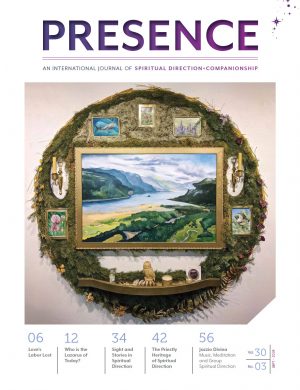

AN INTERNATIONAL JOURNAL OF SPIRITUAL DIRECTION + COMPANIONSHIP
Vol. 30 | No. 3 | SEPT – 2024
Author
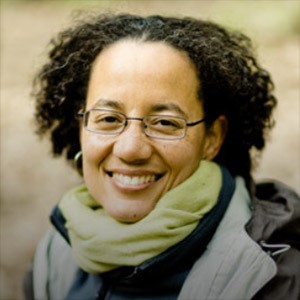
Kaira Jewel Lingo
teaches and leads retreats internationally. Providing spiritual mentoring, and interweaving art, play, nature, racial and earth justice, and embodied mindfulness practice in her teaching. She feels especially called to share with Black, Indigenous, and People of Color, as well as activists, educators, youth, artists, and families. She was one of the esteemed keynote speakers at SDI’s 2024 Conference, Navigating the Dark Night of the Soul.